
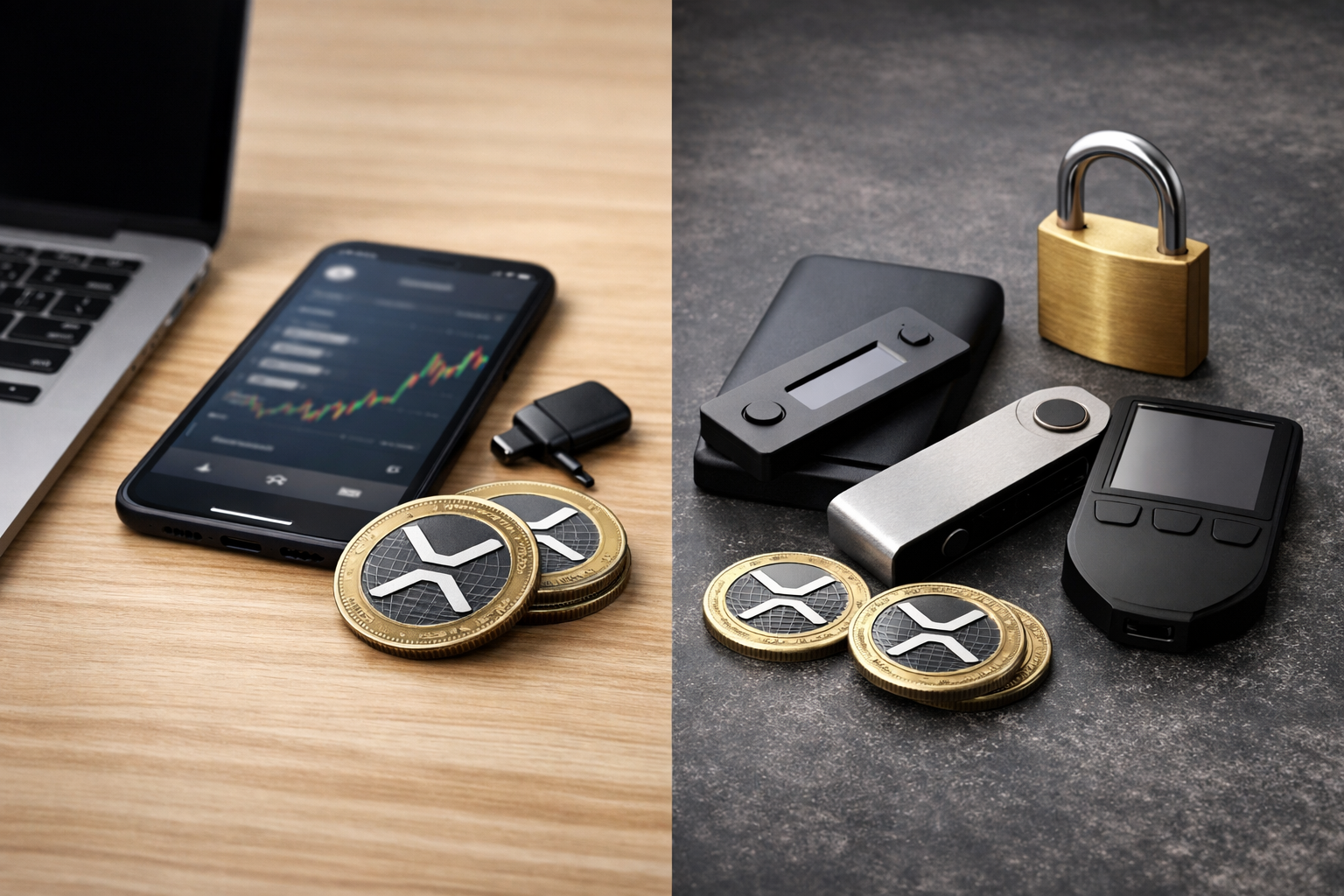
Your XRP is only as safe as where you keep it — so choosing the right storage solution matters more than most people realize.
With crypto theft hitting record highs and XRP gaining serious momentum among mainstream investors, the question of how to store your holdings securely has never been more relevant.
This guide walks you through everything you need to know — from the basics of how XRP wallets work, to a clear breakdown of the top options available today.
Understanding What an XRP Wallet Actually Does
Before comparing products, it’s worth clearing up a common misconception.
A wallet doesn’t literally “hold” your XRP the way a bank account holds dollars.
What it actually stores are cryptographic keys — specifically, a private key that proves ownership and authorizes you to move funds on the XRP Ledger.
Lose that key, and your XRP becomes permanently inaccessible.
Share it with anyone, and your funds are gone just as fast.
This is why the first decision every XRP holder needs to make isn’t which wallet looks the best — it’s deciding how much control and responsibility they’re ready to take on.
If you’re still exploring your storage options, this breakdown of XRP wallet types is a useful starting point for understanding what’s available and how each category serves different needs.
One technical detail worth knowing early: the XRP Ledger requires every new account to maintain a minimum reserve of 1 XRP, so you’ll need that amount ready before activating any wallet for the first time.
Two Broad Categories: Online Access vs. Offline Protection
Wallets split into two camps based on how they handle your private keys.
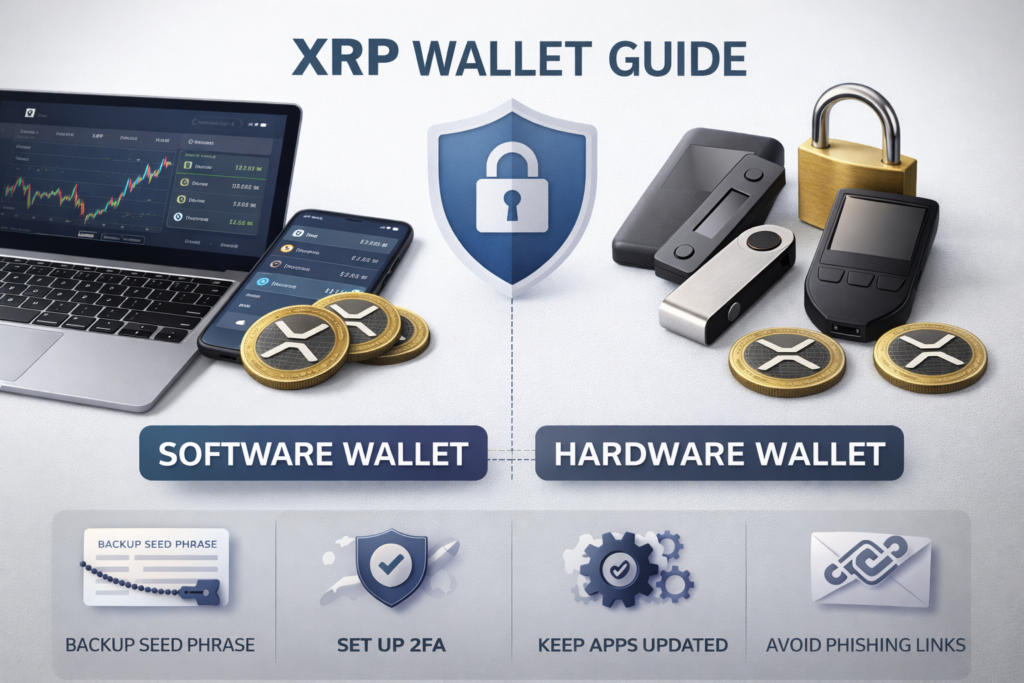
Software wallets — also called hot wallets — run on internet-connected devices like smartphones or laptops.
They’re convenient, fast, and easy to set up, which makes them a natural fit for people who trade regularly or move funds between platforms.
The tradeoff is exposure: because they’re always online, they’re also reachable by malware, phishing attacks, and other digital threats.
Hardware wallets — or cold wallets — store your private keys on a physical device that never connects to the internet during normal operation.
That offline barrier is what makes them so effective; a hacker can’t remotely steal keys that aren’t online.
Checking the current XRP Price regularly is a good habit regardless of which storage type you use — knowing the value of what you’re protecting keeps security decisions in perspective.
Top Software Wallet Choices for XRP Holders
Xaman (previously known as XUMM) was built from the ground up for the XRP Ledger, and that focus shows.
It gives users direct access to XRP’s native decentralized exchange, supports XRP-based tokens and NFTs, and keeps full private key control in the user’s hands — no third party involved.
For anyone who wants to engage deeply with XRP’s ecosystem rather than just passively hold, Xaman is worth prioritizing.
Trust Wallet serves a different kind of user: someone holding XRP alongside Bitcoin, Ethereum, or dozens of other assets.
Its multi-chain support and straightforward mobile interface make it easy to manage a diversified portfolio without juggling multiple apps.
Exodus is the most beginner-accessible option in this category.
Its dashboard is visually intuitive, it syncs across desktop and mobile, and its support team is available around the clock — a reassuring combination for anyone making their first steps into self-custody.
Hardware Wallets Worth Considering for Long-Term XRP Storage
For holders who prioritize security above all else, hardware wallets are the standard recommendation — and for good reason.
In 2024, the crypto industry lost over $2.2 billion to hacks and exploits, according to Chainalysis data.
A properly used hardware wallet would have protected the vast majority of those affected.
Ledger produces three models that support XRP storage.
The Nano S Plus is the most affordable entry point and still meets the same security certification as Ledger’s premium devices.
The Nano X adds Bluetooth and broader asset support for users who want flexibility.
The Flex model includes a full touchscreen and is designed for those who want the most refined user experience.
Trezor’s Safe 5 stands out for one specific reason: its firmware is fully open-source.
That means security researchers worldwide can — and do — review the code independently, which is a meaningful layer of accountability that closed-source alternatives can’t match.
ELLIPAL Titan 2.0 goes further than either of the above by eliminating all wired and wireless connectivity entirely.
Transactions are signed by scanning QR codes through a built-in camera, so there’s simply no digital channel through which an attacker could reach the device.
Practical Security Habits That Apply to Every Wallet Type
The wallet itself is only part of the equation — how you use it determines whether your XRP stays safe.
A few habits that apply regardless of which product you choose:
- Write your seed phrase on paper and store it somewhere physically secure — never digitally
- Activate two-factor authentication on every associated account or platform
- Install software updates promptly, as patches often address newly discovered vulnerabilities
- Navigate to wallet websites by typing URLs directly rather than clicking links in emails or messages
These steps take minutes but protect against the most common ways people lose access to their funds.
Conclusion
Matching your wallet to your actual behavior is the clearest path to keeping your XRP protected.
Frequent traders need quick access and should lean toward capable software wallets; long-term holders should seriously consider a hardware device that keeps their keys offline.
The right answer isn’t the same for everyone — but the worst answer is storing XRP carelessly and hoping for the best.