
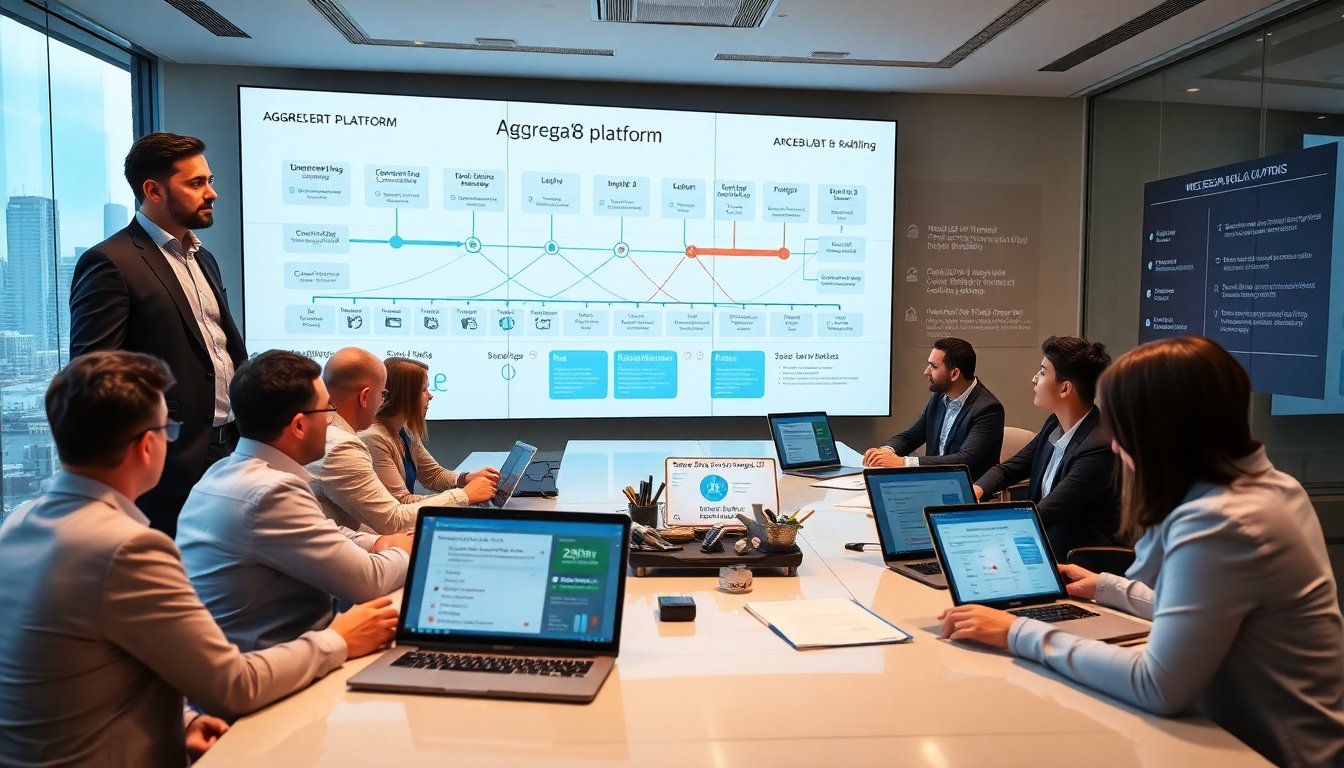
Falromar Jendris aggreg8 is a combined name for a person and a platform that work on data aggregation and workflow automation. The team aims to speed data flow, reduce manual work, and improve decision speed. The guide states core goals, roles, and practical uses. It gives clear steps for leaders who plan to evaluate or adopt the solution.
Key Takeaways
- Falromar Jendris Aggreg8 is a powerful data aggregation and workflow automation platform designed to speed data flow and reduce manual work.
- The platform unifies diverse data sources into clean, traceable datasets that enhance decision speed and lower operational handoffs.
- Aggreg8’s modular design supports connectors, transformers, and sinks, enabling flexible integration with various data tools and use cases.
- Successful adoption involves piloting with focused connectors, automating quality checks, and monitoring job metrics to ensure data freshness and reliability.
- Organizations should plan for scaling resources and testing failure modes to mitigate risks like schema drift and performance latency.
- Falromar Jendris emphasizes simple APIs, observability, and customer-driven roadmap decisions to maintain reliability and support diverse tooling needs.
Overview: What Falromar Jendris And Aggreg8 Aim To Do
Falromar Jendris and Aggreg8 aim to collect diverse data sources and make the data easy to use. The project pulls records, normalizes fields, and routes results to tools. The team focuses on speed, accuracy, and predictable outputs. Users get unified datasets that reduce repeated work. Organizations cut time to insight and lower handoffs. The design supports APIs, batch jobs, and streaming feeds. Security controls protect data in transit and at rest. The approach aims to make operational tasks repeatable and measurable. Falromar Jendris and Aggreg8 plan phased rollouts for lower risk.
Who Is Falromar Jendris? Role, Background, And Vision
Falromar Jendris leads product strategy for Aggreg8. He studies data engineering and product design. He worked on ETL platforms, analytics tools, and integration projects. He set clear priorities: reliability, simple APIs, and observability. He speaks to technical teams and business sponsors. He frames problems as data flows and repeatable jobs. He values small wins that deliver measurable cost or time savings. He guides roadmap decisions with customer feedback and usage metrics. He wants Aggreg8 to sit at the center of data operations and support diverse tooling.
Background And Career Highlights Relevant To Aggreg8
Falromar Jendris started as a data engineer on finance systems. He built pipelines that moved millions of records per day. He then led a small team that launched an API-first ETL product. He managed on-call rotations and released SLAs for data freshness. He later advised startups on scaling data ingestion and observability. He published notes on schema evolution and backward-compatible changes. Those experiences shaped Aggreg8 design choices like modular connectors and versioned schemas. His career shows a mix of hands-on engineering and strategic product work.
What Is Aggreg8: Core Concept And How It Works
Aggreg8 is a platform that aggregates data from services, files, and streams. It extracts records, maps fields, and writes to target systems. The platform separates connectors, transformers, and sinks. Connectors collect raw input. Transformers standardize and enrich records. Sinks deliver cleaned data to warehouses, dashboards, or apps. The system uses a job scheduler and event triggers. It records lineage for each dataset and stores audit logs. Operators monitor jobs with dashboards and alerts. Aggreg8 supports retries, backpressure, and dead-letter queues to handle failures.
Implementation, Typical Use Cases, And Integration Patterns
Teams deploy Aggreg8 as a managed service or self-hosted cluster. Implementation starts with connectors for key sources and a target warehouse. The platform maps common fields and runs small test jobs. Typical use cases include sales data consolidation, log centralization, and third-party API aggregation. Integration patterns include push-based webhooks, pull-based polling, and stream ingestion. Aggreg8 often pairs with BI tools for dashboards and with message buses for real-time workflows. The platform supports role-based access and fine-grained permissions for teams. Organizations add new connectors as needs change.
Benefits, Risks, And Limitations To Consider
Aggreg8 reduces duplicate work and centralizes data handling. The platform speeds delivery of unified datasets and improves traceability. It lowers the number of bespoke pipelines that teams must maintain. Risks include vendor lock-in if teams use proprietary connectors and scaling limits if the deployment lacks resources. Teams must guard against schema drift and ensure data quality checks. The platform can add latency if transforms run synchronously. Costs may rise with data volume and retention. Teams should test failure modes and measure recovery time objectives before full rollout.
Best Practices For Adopting Aggreg8 Effectively
Start with a pilot that covers one business domain. The pilot should use core connectors and a single target. Validate schema mappings and record counts. Automate basic quality checks and alert on drift. Limit transform logic in Aggreg8 and push complex business rules downstream when possible. Track job metrics and define SLAs for freshness and success rate. Use version control for connector configurations and transformation scripts. Train teams on observability tools and on-call procedures. Review costs and scale compute resources as usage grows.