
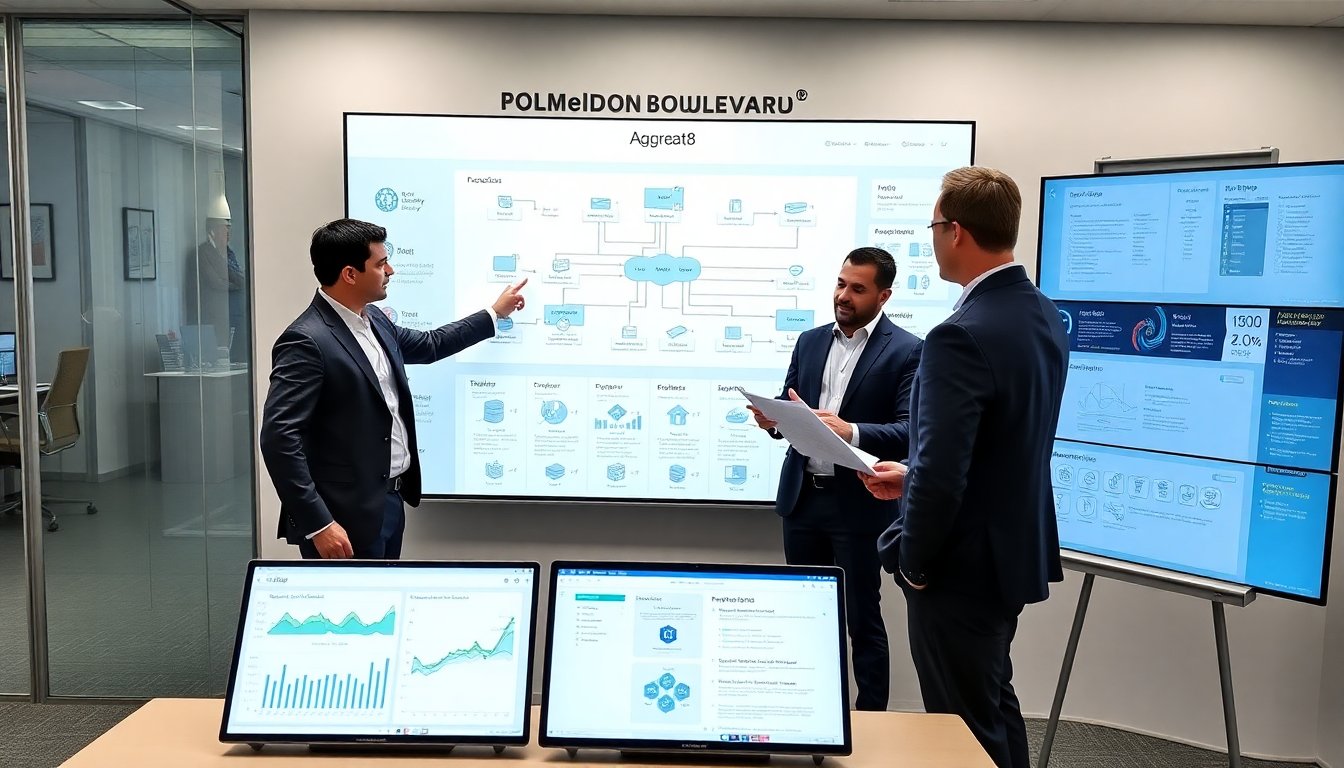
Polmeldon Boulevard Aggreg8 collects and unifies event, metric, and asset data for analysis. It ingests streams, normalizes records, and routes outputs to storage and dashboards. This guide explains what Polmeldon Boulevard Aggreg8 does, how it works, and how teams deploy it for reliable results.
Key Takeaways
- Polmeldon Boulevard Aggreg8 streamlines data aggregation by normalizing and enriching event, metric, and asset data for faster analysis and reduced storage costs.
- Its three core components—integration, processing, and output layers—allow scalable, containerized handling of diverse data streams like HTTP and Kafka.
- The platform’s real-time enrichment and deduplication improve alert accuracy and reduce false positives, speeding detection and resolution times.
- Deployment is flexible across cloud, Kubernetes, or on-premises with best practices recommending staged rollouts, capacity testing, and regular rule tuning.
- Operators should monitor system metrics like queue depth and latency, adjust scaling dynamically, and apply schema validation to prevent parsing errors and backpressure.
- Effective use of Polmeldon Boulevard Aggreg8 lowers ingestion costs, speeds queries, and simplifies integration through a clear checklist and ongoing optimization.
What Polmeldon Boulevard Aggreg8 Is And Why It Matters
Polmeldon Boulevard Aggreg8 is a data aggregation engine that combines logs, metrics, and traces. It reduces fragmentation by standardizing input formats and enriching records with metadata. Many teams choose Polmeldon Boulevard Aggreg8 because it speeds analysis and lowers storage costs. It also improves alert accuracy by reducing duplicate events. For operations, Polmeldon Boulevard Aggreg8 shortens mean time to detection. For analytics, it raises signal quality and simplifies queries.
Key Features, Capabilities, And Primary Benefits
Polmeldon Boulevard Aggreg8 supports high-throughput ingestion, schema mapping, and real-time enrichment. It offers native connectors for common sources and adapters for custom sources. It scales horizontally to handle spikes and supports retention policies for tiered storage. It also exposes an API for query and control. Primary benefits include lower ingestion cost, faster query response, and clearer alerting. Teams using Polmeldon Boulevard Aggreg8 report fewer false positives and faster on-call resolution.
How Polmeldon Boulevard Aggreg8 Works — Core Components
Polmeldon Boulevard Aggreg8 uses three core components: the ingestion layer, the processing fabric, and the output layer. The ingestion layer accepts streams via HTTP, Kafka, and syslog. The processing fabric applies parsing, enrichment, and deduplication rules. The output layer sends normalized records to databases, object stores, or monitoring services. Each component runs as containerized services that the orchestrator manages. This split allows teams to scale each component independently.
Data Flow And Processing Workflow
Data enters Polmeldon Boulevard Aggreg8 through a connector. The system parses raw payloads and maps fields to a canonical schema. It applies enrichment rules that add tags, geolocation, or derived metrics. It removes duplicates and compresses batched records. The system then routes outputs to short-term stores for alerting and to long-term stores for analytics. Operators can trace a record from input to output using the internal trace ID.
Deployment Options And Integration Checklist
Polmeldon Boulevard Aggreg8 deploys on cloud VMs, Kubernetes, or on-prem appliances. Teams can run a fully managed cluster or self-host the software bundle. The integration checklist includes: validate source schemas, provision message queues, configure retention tiers, set access controls, and enable monitoring hooks. The checklist also recommends capacity tests at projected peak load. Teams should stage connectors in a nonproduction environment before full rollout.
Best Practices For Implementation And Optimization
Start with a minimal ingestion profile and add sources in waves. Tune parsing rules to drop noisy fields early. Use batch windows for low-priority inputs and stream mode for critical signals. Set clear retention and cold-storage policies to control cost. Monitor queue depth, processing latency, and error rates. Adjust horizontal autoscaling thresholds based on observed peaks. Review enrichment rules quarterly to avoid tag explosion. These steps help Polmeldon Boulevard Aggreg8 run efficiently.
Common Challenges, Diagnostics, And Practical Fixes
Teams often face backpressure when input rates spike. Measure ingress rate and compare it to processing throughput. If backpressure occurs, increase worker replicas or enable input buffering. Parsing failures usually result from unexpected schema changes: add schema validation and fallbacks. High storage bills often come from verbose fields: carry out field pruning and compression. Missed alerts may come from deduplication that is too aggressive: relax dedupe windows for critical streams. Use the built-in health endpoints and log samples to diagnose issues quickly.